Lessons from the Seashore
Standing out in the salt air on a particularly demanding afternoon at Cape Hatteras National Seashore, I found myself holding onto a new motto: It’s going to be great, and even if it’s not, something great will come out of it.
This summer gave me plenty of chances to test that out. Along this barrier island coast, the rarest and most beautiful shells aren't found on still days; they churn up from deep below only after heavy surf rolls through. The turbulence reveals things that were hidden, reshaping the shoreline into something completely new.
This season pushed me and stretched my perspective, giving me a much clearer sense of what I need, what I want, and how I choose to move forward. Out here, nature isn't just something we manage or protect; it is a mirror. It teaches our hurried bodies how to downshift, breathe, and navigate ourselves; if we are only willing to pause and receive it.
Standing at the threshold of autumn, I’ve been reflecting on the lessons written into the sand and salt spray of this coast: five invitations from the seashore on how to slow our pace, soften our grip, and hold steady when everything around us is in motion.
At its heart, what the outdoors has always offered me is a deep breath. When I first started working for the Park Service, that was really what I was searching for: a place where I could get away from all the noise. Over time, though, and especially after moving to an island, I found it was nearly impossible to completely get away from it.
An island is small. Even tucked away in the woods or down along the coves, you never truly escape the hum of people, traffic, and daily motion. Out on the open beach, external quiet simply doesn’t exist. The ocean never stops moving, the wind never settles, and the waves never stop breaking. If we wait for a place like this to turn silent before we let ourselves relax, we will never find it.
That was when I learned the quiet couldn’t come from the outside; it has to come from within. Peace wasn’t something the coast handed to me on a quiet afternoon. It was something I had to choose to receive by dropping an anchor right in the middle of all that movement.
On my days off, I would sit down near the water. At first, my mind still carried the pace of the week, running through logistics, replay loops, and to-do lists. But if you sit long enough, something shifts.
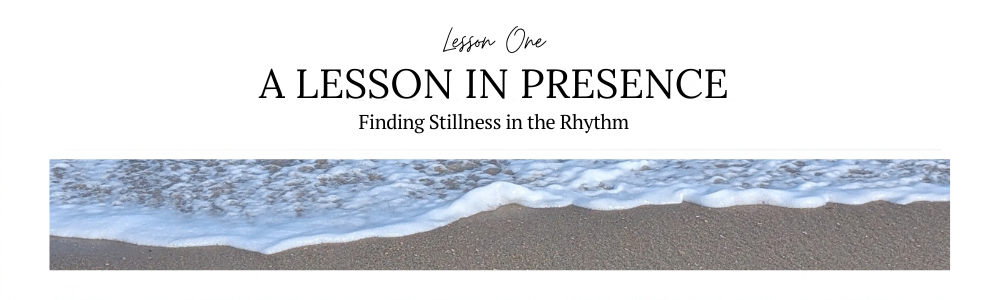
The beach became a haven not because the elements calmed down, but because the rhythm itself is so steady. Watching the water, you notice there is a brief, suspended moment, a natural pause before the crash. Being out there reminded me that stillness isn’t the absence of noise or movement. It is an internal choice to pause, meet that steady rhythm, and finally take that deep breath.
It is easy to get caught up in the purely human machinery of life: the emails, the crowds, the traffic, and the unpredictable rush of the day. But out here, when we lift our eyes from whatever demands our attention right in front of us, this entire landscape is teeming with life that does not care about our schedules at all.
Wonder is not an accident. It is an intentional orientation. It is choosing to notice the wild neighbors living right alongside us. When we pause to witness them, our nervous system finally gets the permission it needs to slow down, giving us gentle perspective on what we are doing and why we are doing it.
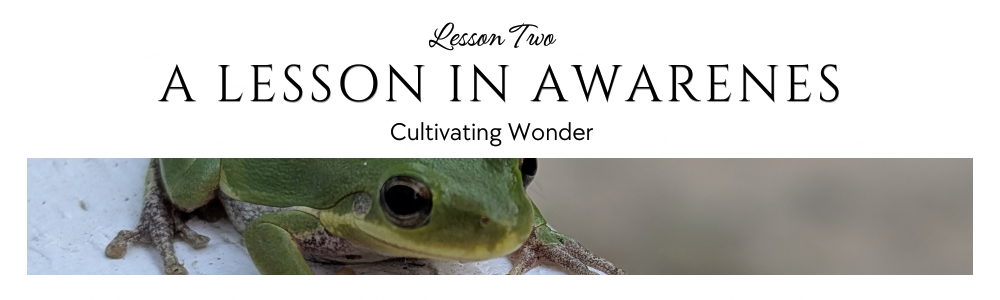
You begin to see them everywhere once you soften your gaze. Little green treefrogs tuck themselves neatly into the corners of the campground bathhouse. Crickets and spiders quietly navigate the cool maze of the water pipes. Sleek lizards bask in the heat radiating off the siding of the ranger station, and late summer brings a sudden aerial dance of dragonflies swooping in just when we need relief from the mosquitoes.
Some days offer high drama, like tiny red-winged blackbirds fearlessly mobbing and chasing a massive turkey vulture away from their nests, or a brown pelican folding its wings to plunge like a stone straight into the surf for fish. Other times the gifts are quiet and fleeting: an otter bounding unexpectedly across the sand, dolphins rolling effortlessly through the green swells, ghost crabs darting like shadows across the inner dune road, or a fawn born near the maritime woods early in the season slowly steadying itself on long, wobbly legs.
None of these creatures are performing for our benefit. They are simply living, adapting, and raising their young along this dynamic strip of dunes and salt marsh.
Noticing them does something vital for our hurried spirits. It shrinks our daily frustrations down to size. It reminds us that we are not separate from the natural world, and that we share this space with rhythms much older and wiser than our anxieties. Cultivating wonder means keeping our eyes open wide enough to remember the larger picture, finding deep grounding in a wild beauty that was here long before our day began, and will carry on long after the sun goes down.
Gaining that perspective from dry land is one thing; having the Atlantic test it in real time is another.
Before coming here, I spent seasons working in Yosemite, surrounded by massive granite. I am a naturally cautious person, and out on a trail, I like to keep two steps between myself and disaster whenever possible. In the mountains, that works. Danger has clear boundaries. You respect the drop, you stay two steps back from the edge, and the stone holds you.
When I arrived on the Outer Banks, I was eager to understand the water, and I wanted to jump right in and try surfing. But the ocean does not offer that kind of buffer. It has no fixed edge, no solid ledge to brace against.
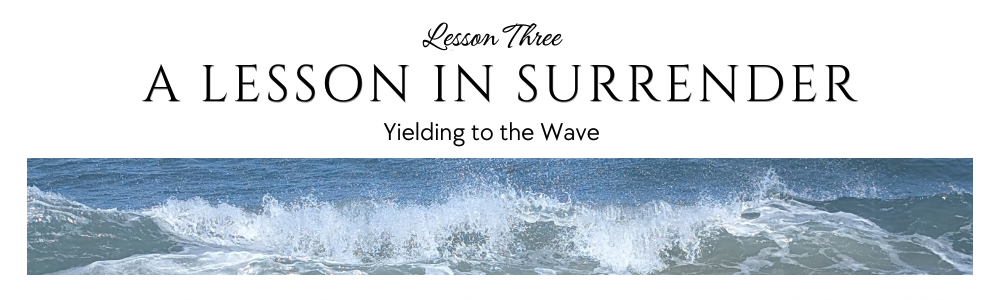
The Atlantic gave me an immediate lesson in humility. I caught a breaking wave wrong and took a total wipeout. I was rolled across the sand, took saltwater straight up my nose, and in that churning foam, I completely lost track of which way was up. In that split second of panic, your instinct is to thrash. You want to grab onto something, fight the water, and force yourself upright. But you cannot fight the ocean. The harder you claw at a breaking wave, the faster it wears you down.
Nature everywhere reminds us that control is an illusion, but the sea does not let you pretend for a single second. She is vastly bigger than our plans, our schedules, or our expectations.
That wipeout stuck with me because transitions in our personal lives feel exactly like being rolled in the surf. A sudden plot twist, an unexpected life shift, or a major personal crossroads is rarely clean or graceful. It is disorienting, it churns you up, and it completely strips away your footing.
What the wave taught me is that surviving the tumble is not about overpowering the water. It is about humility. It is knowing when to stop thrashing against forces you cannot change, letting the turbulence run its course, and trusting your own natural buoyancy. No matter how disorienting the wave feels in the moment, once you stop fighting it, the surface is always right there waiting for you.
Out here on the seashore, it isn't just the water that is constantly moving. The land itself is in motion. We see it every single day as dunes migrate, shoals reform, inlets shift, and the beach beneath our feet changes shape with every rising and falling tide.
On a barrier island, the only constant is change. When the ground itself refuses to sit still, fixed maps do not help you much. You have to learn to rely on an internal compass.
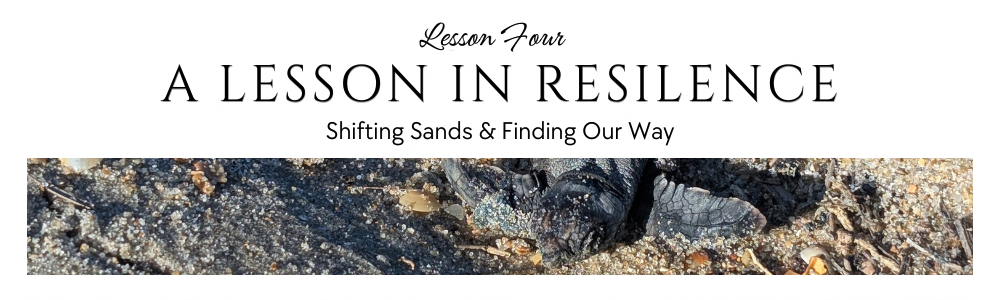
I was reminded of that in an unexpected, tender way this season. Down along the north side of Cape Point, I came across one lone little Loggerhead hatchling that had washed back up onto the sand. I knew there had been a nest excavation and hatchling release happening up near Buxton earlier that morning, and I could only suppose this little one was part of that group. The strong longshore currents and tumbling surf had swept it off course, depositing it right back onto the beach where it never expected to be.
I was able to help that tiny turtle get its bearings and make its way back into the surf. What struck me most was the small crowd of visitors who gathered around in quiet awe. In that brief, impromptu moment, I got to do what I love most about this work: share the raw magic of nature, connect people to this dynamic barrier island, and remind them how resilient life really is.
That little hatchling did not lose its true north just because the currents threw it off course. It simply needed a moment to reorient, and a gentle hand along the way, to find the water again.
When the sands of our own lives shift, and unexpected currents wash us up somewhere we never planned to be, we do not have to panic. We just have to look inward to our internal compass, remember what grounds our purpose, and know that it is completely okay to accept a helping hand as we find our way back to the flow.
One of the most remarkable gifts of living and working on this narrow strip of barrier island is that you can stand in one place and watch both the sunrise and the sunset over open water. You see the dawn break across the restless Atlantic, and by evening, you can simply turn around to watch that same golden light sink into the quiet waters of the Pamlico Sound.
It surrounds you. It reminds you that we are living inside an unbroken circle.
We feel that same circular rhythm in the turning of the seasons. Spring and summer arrive with an intense, expansive energy: the rush of travelers, the heavy heat, the fast pace of long days, and the shifting runs of drum and bluefish moving past the cape. And then, quietly, late September arrives. The mornings begin to carry a cooler, salty breeze. The angle of the light softens across the maritime forest, and the energy gently turns inward toward autumn.
Everything in this landscape has its own season. John Muir wrote that when we try to pick out anything by itself, we find it hitched to everything else in the universe. Nothing here stands alone. The runs of fish, the bird migrations along the flyway, the coastal weather, and our own human presence are all bound up in the exact same pulse.
Most of us only hold a temporary post in that rhythm. We pour our energy into the work and the people around us, and then the season naturally draws toward an end.
What the seashore has taught me about seasons is that every phase has an essential purpose. We can live fully and breathe deeply through the summer heat while we are in it, but we also have to honor the quiet arrival of autumn. Being good stewards of these lands means learning to be good stewards of ourselves: recognizing when one chapter has fulfilled its purpose, carrying what it taught us into the next, and trusting that every ending is simply the natural turning of the cycle.

As this season comes to a close, I find myself standing at the edge of a significant personal transition. After six years with the National Park Service, my path is leading me away from the agency I have fallen deeply in love with. I am stepping away to be closer to my family and begin a new chapter.
Stepping away from the uniform carries real grief, because I believe with everything in me in the mission of the Park Service: to protect these irreplaceable places for the education, enjoyment, and inspiration of this and future generations. But what this coast has reinforced for me is that the work does not end when we pack our gear or turn in our badges. Being a steward of the land is not merely a job title. It is a way of walking through the world that you carry wherever you go.
Across every landscape I have been privileged to serve over these six years, the land has been my greatest teacher:
The forests taught me how to heal, offering a quiet green canopy to rest a tired spirit.
The deserts taught me how to endure, stripping away the unnecessary to reveal what is essential.
The mountains taught me how to connect, anchoring human vulnerability against enduring stone.
And this seashore taught me how to be inspired, lifting my gaze and reminding me how vast the world truly is.
In the mountains, canyons, and forests, you survive by watching your footing, measuring every pace against rocks, roots, and uneven earth. But here at the edge of the Atlantic, there are no fixed steps to trace. The sea asks you to do something entirely different. It invites you to lift your eyes from the sand beneath your feet and look outward to that clean, unbroken line where the water meets the sky.
It invites you to watch the horizon. It reminds you that our stories are never finished, and that we continue to write them every single day.
When we learn to read the wind, the water, and the shifting tides, we begin to understand how to read the quiet currents within ourselves. The land gives us guidance, showing us how to honor our own seasons, trust our internal compass, and make grounded decisions for our lives. Nature teaches us who we are, if we are only willing to pause and receive it.
That desire to pause and receive is why I cannot leave these stories behind in the field. Even as my season in uniform comes to an end, my commitment to interpreting the natural world is stepping into a new form through my upcoming book, Ranger Rhythms.
Designed as a year-long journey of fifty-two weekly reflections, Ranger Rhythms gathers lessons across four distinct landscapes: the forest, the mountains, the desert, and the sea. Each week offers an intimate window into the wild, pairing true stories from the field with gentle invitations to regulate our nervous systems, soften our hurried pace, and find our footing in the changing seasons.
Modern life routinely demands that our bodies live in high gear, disconnected from the earth beneath our feet. We brace against uncertainty, rush through transitions, and forget how to listen. The wild offers us a different way.
Through these pages, we will explore:
How the quiet stillness of deep forest canopies can downshift an overstimulated mind.
How the vast silence of desert plains can teach us to endure life's dry spells with grace.
How the enduring presence of mountain peaks can anchor our deepest anxieties.
How the breathing cadence of coastal tides can teach us to surrender control and trust our buoyancy.
My hope for Ranger Rhythms is that it becomes a steady companion beside your morning tea or on your bedside table. A place where you can take a slow breath, listen to the wisdom of the earth, and remember that you are allowed to slow down.
No matter where your individual path leads today, may you keep your compass true, carry the spirit of these wild lands wherever you go, and never forget to lift your eyes to the horizon.